

Rat Characteristics: Species & Ecology
Introduction: Why Understanding Rat Ecology Matters
When thinking about rat control, the first thing to understand is rat ecology.
Rats are not just small animals — they are remarkably intelligent creatures that have adapted to thrive alongside human living environments. Without understanding their ecology, control measures often fail to deliver the desired results.
On this page, we explain the basic characteristics, behavior patterns, and preferred environments of rats in an easy-to-understand way. Getting to know rats properly is the essential first step toward effective pest prevention.
Basic Characteristics of Rats
What Kind of Animal Is a Rat?
Rats are mammals found in a wide variety of environments around the world. They are particularly closely associated with human habitation, naturally infiltrating residential areas, factories, warehouses, and livestock facilities.
They possess an exceptional ability to adapt to their environment, surviving by responding to even the smallest gaps and changes in their surroundings.
Physical Traits and Abilities
A rat's front teeth grow continuously throughout its life, so it has a natural instinct to gnaw on hard objects to wear them down. This leads to damage to timber, wiring, insulation, and more.
Their bodies are also highly flexible, allowing them to squeeze through surprisingly small gaps. An opening of just a few centimeters is enough for them to enter a building, so even the tiniest hole or crack cannot be overlooked.
Their senses of smell and hearing are also exceptionally sharp, enabling them to detect the scent of food and the presence of humans with great sensitivity. It is common for rats to be active without people ever noticing.
High Reproductive Rate
Rats reproduce at an extremely high rate. They can give birth multiple times a year, with litters of around 5 to 10 pups at a time. They also mature quickly, becoming capable of reproduction within just a few months of birth.
As a result, even if approximately 50% of a population is exterminated, the numbers are said to recover to their original level within about three months. Even when the visible population appears to have decreased, the infestation may continue growing internally — and if action is delayed, damage can re-escalate in a short period.
Do not let your guard down thinking "the numbers dropped a little." Early and continuous action is essential.
Rat Species Commonly Found in Japan
The three rat species responsible for the most damage in Japan are as follows.
Brown Rat (Norway Rat)
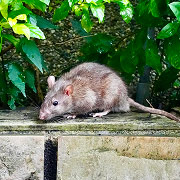
The brown rat is a large species that tends to favor areas close to the ground, such as sewers and drainage systems. It is commonly found around water sources, under floors, and near drainage equipment.
Its strength allows it to gnaw through even hard materials, making it a species that can cause significant damage to facilities and infrastructure.
Black Rat (Roof Rat)

The black rat is highly cautious and an agile climber. It prefers elevated locations, moving along attic spaces, beams, and pipework.
It readily enters the interior of buildings, and damage can spread before people are even aware of its presence.
House Mouse

The house mouse is small in size and can squeeze through extremely narrow gaps. It readily enters warehouses and feed storage areas, making it a species that requires close attention in livestock facilities as well.
Its high reproductive rate means numbers can increase rapidly over a short period of time.
Daily Rhythms and Behavior Patterns
Nocturnal Behavior
Rats are primarily nocturnal animals, active mainly at night. During the day, they rest hidden inside walls, attic spaces, or behind objects, then emerge after dark to forage for food.
This means that even if rats are not seen during the day, they may still be lurking somewhere within the building.
Travel Routes and Territorial Instincts
Rats tend to follow fixed routes as they move around. They prefer paths that are out of sight — along walls, behind objects, and along fences.
Once a route is established, they use it repeatedly, which tends to concentrate damage in specific areas.
Activity Range and How Damage Spreads
While rats sometimes act alone, they more often live near others, which means damage can spread easily. Once a food source or nest is found, they expand their activity range outward from that point.