
Proven Results of "Rat Repellent Device Z"
- [Disclaimer]
- This page is a summary and reorganization of research and reporting materials produced by Hiroyasu Yamada, Yoriko Sakamoto, and colleagues at the Chiba Central Livestock Hygiene Service Center.
Introduction: Evidence-Based Rat Control in Practice
At a pig farm where conventional control measures had failed to reduce rat damage, an evidence-based trial using repellent devices was conducted. This case was reported by Hiroyasu Yamada, Yoriko Sakamoto, and colleagues at the Chiba Central Livestock Hygiene Service Center. Its defining feature was an approach built not on "killing" rats, but on making the environment inhospitable — drawing on an understanding of rat behavioral instincts.
This section presents the details and outcomes of that initiative in a format that can be practically replicated in the field.
Overview of the Target Farm and Damage Situation
Farm Overview
The farm in question was a fully integrated pig farm housing 101 sows.
It consisted of two wooden structures — a farrowing/stall barn and a piglet/fattening barn. Fattening pigs were fed by wet feeding (a method in which water and feed are provided simultaneously) on an ad libitum basis.
- Key Factors
-
- Feed was constantly available
- Wooden construction prone to gaps and cracks
- Extensive attic space and insulation cavities
All of these factors combined to create ideal conditions for rats to become established.
The Reality of the Damage
Rat intrusion had been confirmed since around 2002, and the damage had been gradually worsening.
- Confirmed Damage
-
- Large quantities of rat droppings scattered across floors and walkways
- Droppings mixed into feed
- Damage to roof insulation and walls
- Rat signs (grease marks) on pillars and beams
- A group of approximately 20 black rats found clustering near gaps close to the ceiling
These issues were not merely cosmetic — they represented serious risks to hygiene, productivity, and facility maintenance.
Conventional Measures Previously Used and Their Limitations
The farm had been applying coumarin-based rodenticides twice a year as its standard control measure. However, the damage showed no improvement and rat activity continued unabated.
- Situation at the Time
-
- Rodenticide applications were not reducing population numbers
- Any effect observed was only temporary
- Reinfestation occurred quickly after each treatment
Furthermore, the farm owner had a strong preference against placing rodenticides near pillars, walkways, or any areas accessible to pigs, out of concern that pigs might accidentally ingest the chemicals.
This is a critically important point.
Even when a measure is theoretically effective, it may be "unusable" or "impractical" in real-world conditions.
In other words, there is a real gap between "what works" and "what can actually be used."
Within these constraints, the need arose to find a solution that did not rely on chemical agents.
The Rationale and Installation Policy for Rat Repellent Device Z
Why "Rat Repellent Device Z" Was Chosen
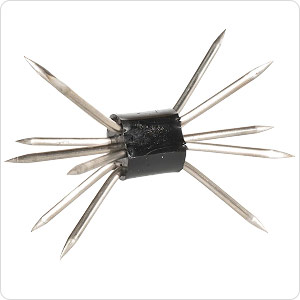
Rats have an instinctive aversion to sharp objects, unpleasant textures, and unstable footing.
Exploiting this behavioral trait, "Rat Repellent Device Z" was introduced with the goal not of killing rats, but of creating an environment they cannot approach or remain in.
"Rat Repellent Device Z" is constructed from stainless steel and resin, giving it a semi-permanent lifespan. The fact that it requires no chemicals and poses no risk to livestock was also a major factor in its selection.
Installation Targets and Method
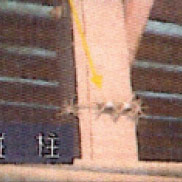
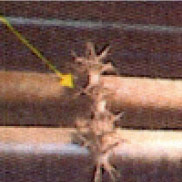
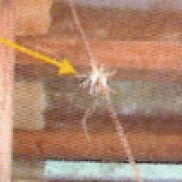
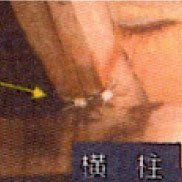
Rather than placing the devices at random, rat travel routes were identified first, and installation was focused on systematically blocking these pathways.
- Primary Installation Points
-
- Vertical and horizontal pillars (rat climbing and descending routes)
- Feed transport pipes
- Chains securing pipe switching tubes
- Movement routes near the ceiling
- Key Principle
-
- Cover not only entry points, but every area rats pass through and congregate in
This approach had a significant impact on the effectiveness of the results that followed.
Trial Installation and Initial Responses
Devices were first installed in a single pig pen as a trial, and nocturnal behavior was observed using an infrared camera.
- Observed Responses
-
- Rats approached the repellent devices
- Stopped partway through
- Turned around and retreated
In other words, a clear "cannot pass" and "do not want to go further" response was observed.
At this stage, it was confirmed that "Rat Repellent Device Z" functions as a physical barrier and also produces a psychological deterrent effect.
Full-Scale Installation and Results
Based on the trial results, a total of 2,000 repellent devices were installed in the piglet barn and fattening barn in April 2004.
- Immediate Responses After Installation
-
- Rats colliding with the devices
- Running about in a panic
- Emitting squealing-like vocalizations
Rats were observed entering a temporary state of agitation and panic.
However, when population numbers were checked one month later, no significant change was observed.
This is a critically important point in this case study.
- Repellent devices alone cannot "drive rats out"
- Repellent devices alone cannot "reduce numbers"
This reality became clearly apparent.
Additional Measures and Environmental Improvement
It was therefore determined that the repellent devices alone were insufficient, and a multi-pronged approach was implemented.
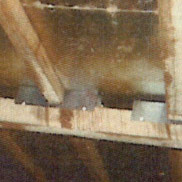
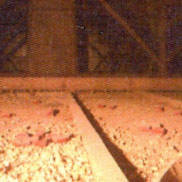
- Measures Implemented
-
- Installation of glue traps
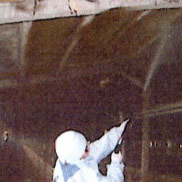
- Flushing rats out using a power sprayer
- Cleaning and disinfection of rat habitation areas
- Additional installation of repellent devices (approx. 700 units)
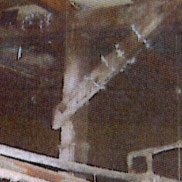
- Installation of iron barrier plates
- Limited application of rodenticide in attic spaces
These measures were implemented simultaneously and in combination.
The key here is the sequence:
- Drive rats out
- Remove dirt, odors, and traces
- Use repellent devices and barrier plates to prevent re-entry
In other words, establishing a continuous cycle of "drive out → reset → block re-entry" was what made the approach effective.
Verification of Control Effectiveness
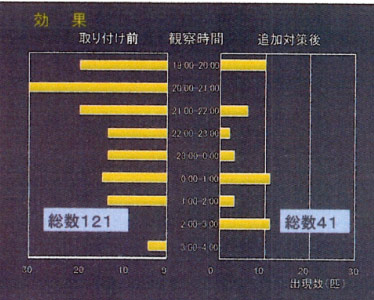
Fixed-point monitoring using infrared cameras confirmed the following clear improvements:
- Number of rat sightings: reduced from 121 to 41
- Droppings scattered on floors and walkways almost completely eliminated
- Feed contamination with droppings also resolved
Rather than rats simply becoming "less visible," a measurable, quantified reduction was confirmed — which significantly strengthens the credibility of this case study.
Characteristics of "Rat Repellent Device Z" (Advantages and Considerations)
Advantages
- Advantages
-
- Semi-permanent lifespan with minimal need for replacement
- Unlikely to fall, meaning no risk of accidental ingestion by pigs
- Effectiveness is not significantly reduced by the presence of feed
- Unlike chemicals, no adverse effects on livestock
Its greatest strength is that it is a measure that can be maintained continuously in the field.
Points to Note
Installation requires time and effort.
The sharp structure means care must be taken during handling.
The number of units required varies greatly depending on the number of rat travel routes.
At the time of introduction, pre-mapping of rat movement routes and careful planning are essential.
Analysis: Why Did It Work?
The most important conclusion from this case study is that "Rat Repellent Device Z" itself demonstrated a clear and measurable pest control effect.
Even during the trial installation phase, rats were observed hesitating to approach the devices and turning back — confirming that "Rat Repellent Device Z" is an effective tool for suppressing rat behavior.
Following full-scale installation, rats were seen colliding with the devices, fleeing in distress, and emitting squealing-like calls — indicating that the devices were successfully creating a highly stressful environment for the rats.
This demonstrates that "Rat Repellent Device Z" is a practically effective material that directly influences rat behavior.
At the same time, in this particular case, the control effectiveness became most apparent when the repellent devices were combined with additional measures such as flushing, cleaning and disinfection, and the installation of barrier plates. This is best understood not as compensating for any shortfall in the devices themselves, but as completing a strategy built around "Rat Repellent Device Z" as its central component.
In other words, "Rat Repellent Device Z" is valuable on its own, and combining it with complementary measures allows its effectiveness to be maximized.
Because rats are highly intelligent learners, half-hearted measures will quickly be adapted to. However, by creating an environment that rats cannot return to even when they try, long-term prevention of infestation becomes achievable.
Summary: Key Points for Applying This in the Field
The key insight from this case study is that rat control is not something that can be completed in a single effort — continuous management and ongoing refinement are essential.
Unless livestock farmers themselves develop a strong awareness of rat prevention and continue to refine their day-to-day management practices, effective rat control is difficult to sustain.
In particular, from the perspective of protecting food safety in production facilities, rat control is critically important.
Since rats can transmit pathogens, eliminating potential sources of infection is a fundamental element of ensuring the safety of livestock products.
This study confirmed that "Rat Repellent Device Z" has a measurable pest control effect.
Even in locations where rodenticides cannot be used, or where chemical treatments have not proven sufficiently effective, "Rat Repellent Device Z" represents a practical and viable control option for use in the field.
The key is not to rely on any single measure, but to select methods suited to the specific conditions of each facility and maintain them consistently.
"Rat Repellent Device Z" can serve as the cornerstone of such an approach — a strong and reliable option for supporting an ongoing, sustainable pest control system.
Building on this field study, the next article will introduce the principles behind effective rat intrusion prevention and offer concrete practical proposals.
- [References]
-
- ■ Hiroyasu Yamada, Yoriko Sakamoto et al.
- "Effectiveness of Repellent Devices for Rat Control in a Pig Farm"
Journal of the Kanto Society of Animal Science and Technology, 2007 - ■ Chiba Central Livestock Hygiene Service Center
- Research Report: "Rat Control in Pig Farms Using Repellent Devices"