
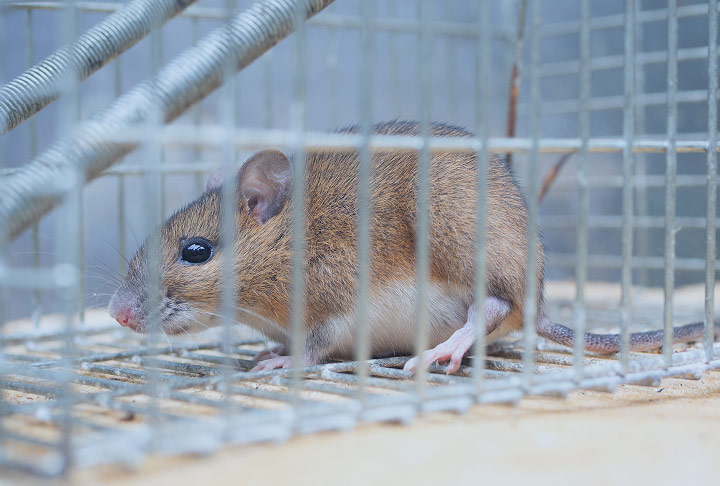
Rat Prevention & "Rat Repellent Device Z"
Introduction: Why Conventional Rat Control Alone Is Not Enough
Rats are a pest that infiltrates human and livestock living environments, causing a wide range of damage — from transmitting infectious diseases and contaminating feed and agricultural produce, to destroying livestock housing structures, equipment, and electrical wiring. In livestock facilities in particular, rat control goes far beyond simple environmental improvement or general pest management.
Japan's Act on Domestic Animal Infectious Diseases Control is designed to "prevent the occurrence of infectious diseases in livestock and stop their spread, thereby promoting the livestock industry." It stipulates that measures such as disinfection and the extermination of harmful animals and insects must be carried out as necessary.
This reflects the fact that, even at a regulatory level, rats are recognized as a serious vector of infectious disease and a contributor to deteriorating sanitary conditions.
Ideally, farms should not wait to be instructed by authorities before taking action — proactive, self-directed rat prevention measures should be implemented as a matter of course to prevent problems before they arise.
However, many people on the ground report that "despite taking measures, the damage never goes away," or that "numbers drop briefly but quickly recover."
This is because conventional control methods can no longer keep pace with the behavioral adaptability and learning capacity of rats.
Let us first review the general principles of rat prevention and the limitations of existing approaches.
The Three Core Methods of Rat Control
Current methods of rat control and extermination can be broadly divided into the following three categories.
Environmental Control
Environmental control involves preventing rat entry and rigorously managing food and feed storage in order to create an environment that denies rats both food and shelter.
The basics include reviewing how feed is stored, not leaving spilled feed unattended, and maintaining general tidiness as part of everyday management.
Physical Control
Physical control involves setting traps and capture devices to catch rats. The appropriate equipment is selected based on the rat species and their travel routes, with careful attention to placement.
While intensive deployment across a wide area can be effective, capture rates are not always high, and covering an entire large livestock house is difficult in practice.
Chemical Control (Rodenticides)
Chemical control involves using rodenticides to eliminate rats. Active ingredients commonly used include coumarin compounds, bromadiolone, difethialone, and zinc phosphide.
Coumarin-based formulations are hemorrhagic toxins that take effect through repeated ingestion and are considered less likely to trigger wariness in rats.
However, when used inside livestock houses, careful attention must be paid to the risk of contamination (mixing with feed), the potential impact on livestock, and restrictions under pharmaceutical regulations.
The Challenges and Limits of Conventional Methods
The Limits of Environmental Control
While environmental control is an important foundational measure, in practice it is extremely difficult to completely seal every entry point and gap.
Entry routes are often complex, and there are frequently structural areas that simply cannot be sealed off — making a complete barrier very hard to achieve in reality.
The Limits of Physical Control
Traps and capture devices are partially effective, but rats are highly intelligent learners — once they associate something with danger, they will simply avoid it. In large spaces such as livestock houses, it is also very difficult to catch every individual, and there will almost always be some that escape capture.
Problems and Risks of Rodenticides
Rodenticides are a powerful tool, but they come with several significant issues:
- The emergence of rodenticide-resistant rats (so-called "super rats")
- The risk of contaminating feed and harming livestock
- Restrictions on where and how they can be used
Growing numbers of practitioners report that rodenticides are "starting to lose their effectiveness," and it is becoming clear that relying on chemicals alone has reached its limits.
A Shift in Thinking: From "Keep Them Out" to "Make Them Leave"
Conventional rat control has focused primarily on point-based measures — sealing entry points, catching rats, and killing them.
However, rats possess exceptional agility and a high capacity for learning: seal one entry point, and they will simply find another route in.
In other words, thinking "block this gap and the problem is solved" does not lead to a fundamental resolution.
What matters is a shift in approach:
rather than focusing only on entry points, the goal should be to make the entire space inhospitable to rats.
The rat control of the future requires creating environments where rats not only "can't get in" — but also "don't want to come in" and "don't want to stay."
The Concept of Repellency and Traditional Knowledge
For centuries, folk wisdom has suggested methods such as "scattering chestnut burrs in the attic to keep rats away."
This works by exploiting the rat's natural aversion to sharp objects, unpleasant textures, and generally uncomfortable conditions.
However, chestnut burrs are irregular in shape, difficult to handle, and can attract insects.
This is where "Rat Repellent Device Z" comes in — developed as a purpose-designed repellent device that incorporates the elements rats find unpleasant, while being carefully engineered for practical shape and ease of installation.
What Is "Rat Repellent Device Z"?
"Rat Repellent Device Z" is a repellent device designed to create an environment that rats find difficult to approach and impossible to settle in.
It can be installed not only at entry points, but throughout the areas where rats are most active — including attic spaces, feeding pipes, water supply pipes, and around equipment.
This makes it possible to transform the entire space into an inhospitable environment for rats, rather than addressing only specific problem spots.
Effectiveness and Features of "Rat Repellent Device Z"
Making the Entire Space Inhospitable
When "Rat Repellent Device Z" is installed, rats temporarily enter a state of agitation and are unable to move about calmly or comfortably.
As a result, the entire livestock house becomes an unwelcoming environment for rats, making it far harder for them to settle in.
Combined Effectiveness with Other Control Methods
"Rat Repellent Device Z" is effective on its own, but when combined with physical control measures such as traps, capture rates have been found to increase significantly.
By combining the approaches of "driving rats out," "keeping them away," and "catching them," a more efficient and comprehensive pest control outcome can be achieved.
Safety and Durability
Unlike rodenticides or ultrasonic devices, "Rat Repellent Device Z" has no adverse effects on livestock. Once installed, it is built to last for the entire lifespan of the facility, providing continuous and long-term effectiveness.
The fact that it does not require frequent replenishment or replacement — as chemical treatments do — is also a significant practical advantage for operators in the field.
Summary: The Thinking Required for Future Rat Prevention
Rats are intelligent, highly adaptable creatures that can no longer be adequately addressed by conventional methods alone.
In addition to sealing entry points, setting traps, and applying rodenticides, it is essential to incorporate the perspective of "creating an environment where rats cannot thrive".
"Rat Repellent Device Z" is a product that puts this new, space-wide approach to rat prevention into practice.
In the next article, we will introduce specific real-world examples of how the device has been used in pig farms and other livestock settings.